
Targeted weight loss: Why your body needs high-quality proteins

1. why diets often fail
Many attempts to lose weight end in the yo-yo effect. The reason: traditional diets lead to a general calorie deficit - but often also to a lack of vital nutrients.
It becomes particularly critical if the body is supplied with too little protein. Then it not only loses fat, but also muscle mass - and this is exactly what slows down the basal metabolic rate. The result: less energy consumption, more cravings, renewed weight gain. If you lose weight without protein, you pay with substance.
What's more, modern foods are often highly processed, contain empty calories but hardly any usable nutrients. The body is full, but not nourished.
2. proteins as the key to sustainable weight loss
Protein is the macronutrient with the greatest satiating effect. It slows down gastric emptying, regulates blood sugar levels and reduces cravings - especially for sugar.
It also protects the muscles in a calorie deficit - a decisive factor for long-term metabolic health. Last but not least, the digestion of protein consumes more energy (thermogenesis) than fat or carbohydrates. Protein-rich diet = more satiety, more metabolic activity, less muscle loss.
A study by Maastricht University showed that test subjects who covered 25-30 % of their energy requirements from protein were able to maintain their weight better in the long term - without losing muscle.
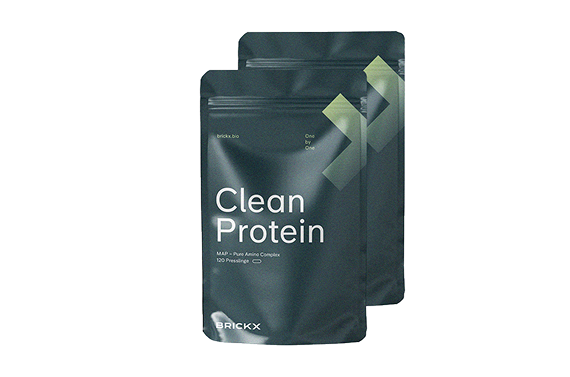
3. comparison of MAP: more efficient than shakes, bars and powders
Conventional high-protein products such as bars, shakes or yoghurts often provide a lot of calories - with questionable usability. MAP (Master Amino Acid Pattern) is different here:
It consists of eight essential amino acids - in the exact optimum ratio for the human body. The net utilization is 99 %, no digestive residues, no added sugar or artificial sweeteners.
Key Takeaways:
-
MAP = protein effect without calorie load
-
No flatulence, no bloating, no sugar
-
Perfect for fasting days, keto, low-carb or intermittent fasting
-
Muscle protein synthesis without insulin spike or blood sugar fluctuation
4. how you can integrate MAP into your weight loss strategy
Regardless of whether you are practicing intermittent fasting, counting calories or eating a low-carb diet: MAP can be integrated flexibly and precisely. You can take it in the morning on an empty stomach, as a meal replacement in the afternoon or before exercise to fuel your muscles. The combination with a high-fiber, plant-based diet is particularly effective. This is because the more clearly and specifically you relieve your metabolism, the more sustainable your weight loss will be - both mentally and physically.
Conclusion
The key to weight loss lies not in doing without, but in understanding. If you support your metabolism instead of overburdening it, you will be more successful in the long term. A precise, high-quality protein intake is not an „add-on“, but the basis. MAP shows how efficient and suitable for everyday use this can be - without compromising on health.
-
Leidy HJ et al (2015). The role of protein in weight loss and maintenance. American Journal of Clinical Nutrition.
-
Layman DK et al (2005). Protein quantity and quality at levels above the RDA improves weight loss and body composition. Nutrition & Metabolism.
-
Halton TL, Hu FB. (2004). The effects of high protein diets on thermogenesis, satiety and weight loss. Journal of the American College of Nutrition.
-
Westerterp-Plantenga MS et al (2009). High protein intake sustains weight maintenance after body weight loss. British Journal of Nutrition
-
Huberman Lab Podcast. (2023). Metabolism & Weight Loss: What Really Works.